
A recent report published by
Infinium Global Research on bio-based polypropylene market provides in-depth
analysis of segments and sub-segments in global as well as regional bio-based
polypropylene market. The study also highlights the impact of drivers,
restraints, and macro indicators on the global and regional bio-based
polypropylene market over the short term as well as long term. The report is a
comprehensive presentation of trends, forecast and dollar values of global
bio-based polypropylene market. According to the report, the global bio-based
polypropylene market is projected to grow at a CAGR of 5.3% over the forecast
period of 2018-2024.
Market Insight
Bio-based
polypropylene is a thermoplastic polymer made from the renewable raw material.
The feedstock for bio-polypropylene is sugar cane stalks and leaves. This green
resin has the same properties and characteristics as standard PP.
Bio-polypropylene is tough and flexible, being able to withstand impacts well
makes it ideal for packaging material. It is produced by enzymatic fermentation
of sugar cane that produces ethanol that is then processed to obtain
bio-polypropylene. The bio-based polypropylene finds its application in the
packaging industry, textiles, bottles, Rubik’s cube stickers, and even polymer
banknotes.
Conventional
polypropylene is made from petroleum in a process that results in large amounts
of greenhouse gases. However, bio-based polypropylene is developed from
synthesis from sugar cane. The use of sugar cane has extensive environmental
benefits. By reducing petroleum use, environmental damage is minimized.
Furthermore, sugarcane sequesters a large amount of CO2 during growth. A net
reduction of CO2 can be achieved by the use of sugar cane for the production of
bio-polyethylene. Over 1.5 billion pounds of CO2 per year is consumed by the
process.
The rising
demand for degradable and light-weight bio-based materials in packaging and
automobile industry are the major drivers for the growth of bio-based
polypropylene. The need to reduce the weight of vehicles will drive the growth
of bio-polypropylene in the automotive industry. Furthermore, several companies
are adopting bio-based raw materials instead of fossil-based raw materials for
the production of biodegradable plastic products to reduce the emission of
greenhouse gases that will propel the growth of bio-based polypropylene market.
However, the use of sugarcane and vegetable crops creates pressure on the food
supply and the presence of cost-effective synthetic polymers hinders the growth
of bio-based polypropylene. Moreover, the rise in technological innovations in
the field of biotechnology and bio-based products for reducing the dependence
on fossil raw materials will create an opportunity for the growth of bio-based
polypropylene.
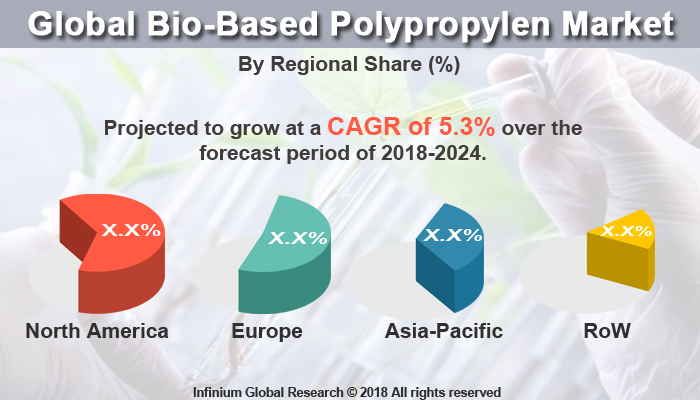
Geographically,
North America region holds the dominant position in the bio-based propylene
market owing to the growth of the automobile industry in this region. Europe is
a leading market owing to an increase in regulations to control non-degradable
plastic usage. Asia-Pacific is the fastest growing market and is expected to
dominate the bio-based propylene market owing to the rise in the automotive
industry in this region. The need to reduce the weight of vehicles will drive
the growth of bio-polypropylene in Asia-Pacific region.
Segment Covered
The report on global bio-based
polypropylene market covers segments such as application, and products. On the
basis of application, the global bio-based polypropylene market is categorized
into electrical and electronics, healthcare, textile, building and
construction, and industrial and household. On the basis of products, the
global bio-based polypropylene market is categorized into auto and commercial
vehicle parts, industrial packaging, sheets, panels and films, durable goods,
injections, and others.
Geographic Coverage
The report provides regional
analysis covering geographies such as North America, Europe, Asia-Pacific, and
Rest of the World. In this section, the key trends and market size for each
geography are provided over the period of 2016-2024. The countries covered in
the North America region include the U.S., Canada, and Mexico; while the
Asia-Pacific region includes countries such as China, Japan, India, South
Korea, Malaysia, and among others. Moreover, Germany, U.K., France, Spain, and
Rest of Europe are the major markets included in the European region. The U.S.
drives the growth in the North America region, as it is the largest market in
the region. In the Asia-pacific region, rapid industrial growth in India and
China offer a substantial potential for the growth in the bio-based
polypropylene market. As a result, the APAC region is projected to experience a
growth at a CAGR of x.x% over the forecast period 2018-2024.
Companies Profiled:
The report provides profiles of
the companies in the global bio-based polypropylene market such as Braskem
S.A., Biobent Polymers, Dow Chemicals, Global Bioenergies, Trellis Earth
Products, Inc., and FKuR Kunststoff GmbH.
Report Highlights:
The report provides deep insights into the demand forecasts, market trends, and micro and macro indicators. In addition, this report provides insights into the factors that are driving and restraining the global bio-based polypropylene market. Moreover, The IGR-Growth Matrix analysis given in the report brings an insight into the investment areas that existing or new market players can consider. The report provides insights into the market using analytical tools such as Porter's five forces analysis and DRO analysis of bio-based polypropylene market. Moreover, the study highlights current market trends and provides forecast from 2018-2024. We also have highlighted future trends in the bio-based polypropylene market that will affect the demand during the forecast period. Moreover, the competitive analysis given in each regional market brings an insight into the market share of the leading players. This report will help manufacturers, suppliers, and distributors of the bio-based polypropylene market to understand the present and future trends in this market and formulate their strategies accordingly.