
A recent report published by Infinium Global Research on
antihypertensive drugs market provides an in-depth analysis of segments and
sub-segments in the global as well as regional antihypertensive drugs market.
The study also highlights the impact of drivers, restraints, and macro
indicators on the global and regional antihypertensive drugs market over the
short term as well as long term. The report is a comprehensive presentation of
trends, forecast and dollar values of the global antihypertensive drugs market.
According to the report, the global antihypertensive drugs market is projected
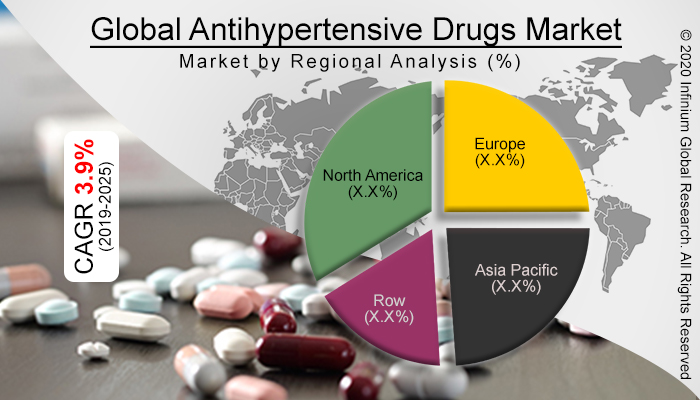
to grow at a CAGR of 3.9% over the forecast period of 2019-2025.
Hypertension is a chronic condition, in which the blood
pressure is elevated abnormally systolic as well as diastolic. Several
conditions such as blood pressure and mental distress can take place due to
hypertension. This is a major risk factor for causing cardiovascular, renal or
endocrine disorders. Antihypertensive drugs are used regularly in other
unrelated situations. These drugs can prevent kidney failure, acute stroke, and
heart failure induced by hypertension and delay the growth of atherosclerosis
by controlling the blood pressure.
An increase in the occurrence of hypertension across the globe
is one of the major drivers for the growth of the antihypertensive drugs
market. Hypertension is one of the major public health challenges in the United
States as it increases the risk of cardiovascular disease. Lack of proper sleep
due to irregular work shifts, lack of proper healthy and balanced diet,
consumption of junk food have contributed to the increase in hypertension. In
2018, the American Heart Association (AHA) heart disease and stroke statistics
update reported that about 34% of adults in the United States had hypertension.
Furthermore, the rise in the aged population and sedentary lifestyle are the
other key factors for the growth of the antihypertensive drugs market
worldwide. The occurrence of hypertension is comparatively high in the elderly
population. Almost 70% of high blood pressure patients are over 60. According
to the United Nations Report, in 2017, the geriatric population is expected to
rise from 962 million in 2017 to 2.1 billion by 2050. On the other side, less awareness of the
antihypertensive drugs among the population is one of the main factors that may
hamper the antihypertensive drugs market. Maximum people in emerging countries
neglect their health-checkups and are not aware of the existing hypertension
condition in them until they detect extreme symptoms. Moreover, increasing
funds for research on hypertension and antihypertensive drugs is anticipated to
create several growth opportunities for the antihypertensive drugs market in
the next few years.
In terms of region, the antihypertensive drugs market is
segmented into North America, Europe, Asia Pacific, and the Rest of the World.
Among all, North America is leading the antihypertensive drug market. This is
mainly due to the easy availability of antihypertensive drugs in the region.
Additionally, the increasing rate of hypertension and the growing geriatric
population in the region also boosts the antihypertensive drug market. On the
other hand, Asia Pacific is expected to grow at a faster rate during the
forecast period. Growing awareness related to the use of antihypertensive drugs
is one of the major factors for the growth of the antihypertensive drugs
market. Moreover, the continuously growing life science industry boosts the
growth of the market in the emerging countries in the Asia Pacific like India,
China, and Malaysia.
The report on the global antihypertensive drugs market covers
segments such as type, therapeutic class, and distribution channel. On the
basis of type, the sub-markets include primary, and secondary. On the basis of
therapeutic class, the sub-markets include diuretics, ace inhibitors, calcium
channel blockers, vasodilators, beta-adrenergic blockers, and other therapeutic
classes. On the basis of the distribution channels, the sub-markets include retail
pharmacy, hospital pharmacy, and e-commerce.
The report provides profiles of the companies in the market
such as Bayer AG, Merck KGaA, Boehringer Ingelheim GmbH, AstraZeneca plc,
Johnson and Johnson Ltd., Pfizer, Inc., Takeda Pharmaceutical Co, Ltd..,
Daiichi Sankyo Company, Sanofi S.A., and Novartis International AG.
The report provides deep insights into the demand forecasts,
market trends, and micro and macro indicators. In addition, this report
provides insights into the factors that are driving and restraining the growth
in this market. Moreover, The IGR-Growth Matrix analysis given in the report
brings an insight into the investment areas that existing or new market players
can consider. The report provides insights into the market using analytical
tools such as Porter's five forces analysis and DRO analysis of the antihypertensive drugs market. Moreover, the study highlights current market
trends and provides forecast from 2019-2025. We also have highlighted future
trends in the market that will affect the demand during the forecast period.
Moreover, the competitive analysis given in each regional market brings an
insight into the market share of the leading players.